

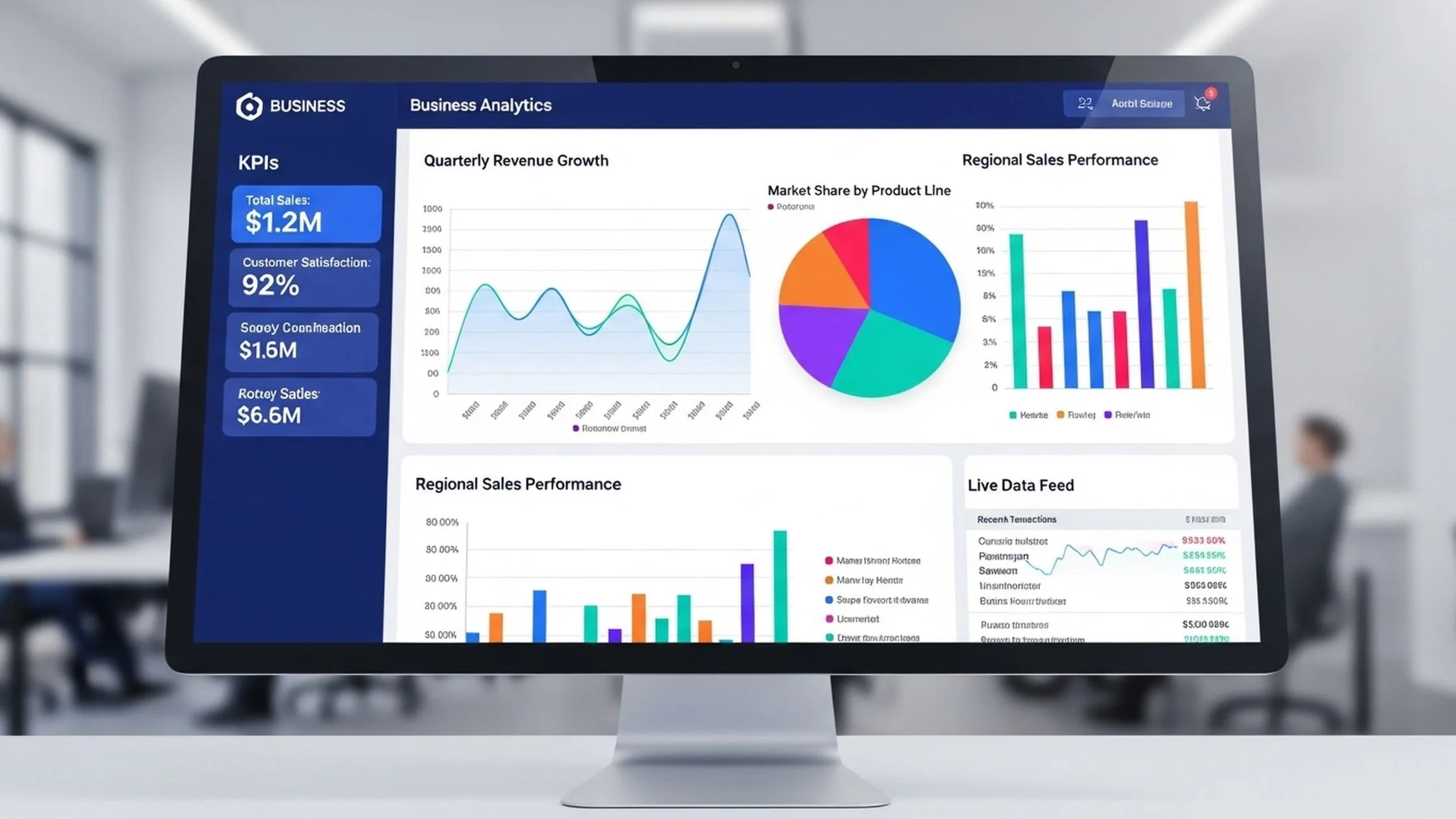
Data has become a core decision-making asset across industries such as finance, healthcare, retail, logistics, marketing, and public services. Therefore, organizations increasingly rely on professionals who can collect information, clean it, analyze patterns, and translate results into clear actions. However, many beginners struggle because the field appears crowded with tools, job titles, and learning paths. You can avoid confusion by following a structured roadmap that focuses on roles, skills, entry-level jobs, and education pathways in the correct order. This article explains how to build a Career in Data Analytics & Data Science: Roles, Skills, Entry-Level Jobs, and Education Pathways practically and realistically.

A data career becomes easier when you follow a clear order instead of jumping between random tools and job titles:
First, choose a target direction—Data Analyst, BI Analyst, Business Analyst, Data Scientist, or Data Engineer—because each path rewards different strengths and daily work outputs.
Then, build the foundation skills that appear in every role: data cleaning, SQL querying, and simple reporting with clear visuals. When you learn these basics early, your practice feels purposeful, and your progress becomes measurable week by week.
Next, turn skills into proof through small, repeatable projects that mirror real workplace tasks. Create a portfolio that shows how you ask a question, pull data, clean it, analyze patterns, and explain results in plain language.
After that, choose an education pathway that matches your discipline level—self-study for flexibility, certificates for targeted skills, or a structured program for guided progress—so your learning stays consistent.
Finally, apply to entry-level roles while continuing to improve one skill at a time, because hiring success usually comes from reliable fundamentals, clear projects, and steady execution.
Data careers move faster when you match your learning to a real role. Therefore, you should understand what each role delivers day-to-day before you choose tools and courses:
When you clarify your target role first, you learn with purpose and avoid wasting time on mismatched tools. Consequently, you build job-ready skills faster and create a clearer path into entry-level opportunities.
Strong data careers start with a small set of core skills that repeat across most roles. Therefore, these fundamentals should come first because they support accuracy, clarity, and long-term growth.
Raw data gets cleaned, missing values get handled, and formats get standardized for analysis. Duplicates get removed, errors get corrected, and each transformation gets documented clearly. Accuracy improves early, so later insights stay reliable and usable.
The right data gets pulled from databases with clear logic instead of guesswork. Joins, filters, grouping, and window functions build structured and correct outputs. Results get validated carefully, so reporting reflects the true story.
Dashboards, charts, and summaries present findings in a way people grasp quickly. Visual choices match the question and highlight the key takeaway without clutter. Decisions improve through structure, so stakeholders act with confidence.
Analysis gets automated, larger datasets get handled, and workflows get repeated consistently. Data libraries support cleaning, exploration, and reproducible outputs across projects. Manual effort drops, so results stay scalable and dependable.
Statistical thinking tests patterns and reduces the risk of misleading conclusions. Models get evaluated with proper metrics, validation steps, and bias awareness. Limitations stay clear, so outcomes remain practical and trustworthy.
These skills create a reliable foundation for both analytics and data science work. Consequently, faster learning, stronger projects, and better entry-level readiness follow when these fundamentals stay consistent.

The right tools help you work faster, stay accurate, and present results clearly across real business tasks.
i. SQL: Pull, filter, join, and validate data so your analysis starts with the right numbers.
ii. Spreadsheets: Clean quick datasets, run basic analysis, and share simple reports fast.
iii. Python: Automate cleaning, exploration, and repeatable analysis for larger datasets.
iv. BI Tools: Build dashboards that stakeholders can understand, trust, and use regularly.
v. Version Control + Notebooks: Track changes, document work, and keep projects reproducible and professional.
These tools cover most entry-level expectations while giving you a strong base to grow into BI specialization or deeper data science work.
Entry-level data roles focus on dependable execution, clean reporting, and clear communication. Therefore, these jobs build real experience while strengthening core skills used across analytics and data science teams.
Basic reports and KPI tracking support day-to-day business decisions and routine reviews. SQL queries and spreadsheets organize data so trends become clear and measurable. Dashboards and summaries stay consistent, so teams act on trusted numbers.
Recurring reports get built, refreshed, and checked to keep performance visibility steady. Definitions and filters stay controlled, so the same metric means the same thing everywhere. Delivery stays on schedule, so stakeholders rely on updates without follow-ups.
Dashboards get maintained, improved, and validated as data sources and needs change. Simple data models support visuals, so reporting stays fast and understandable. Data checks stay routine, so errors get caught before they reach leaders.
Data gets monitored, cleaned, and reconciled across systems to reduce daily friction. Process gaps get flagged with evidence, so teams fix issues before they scale. Operational insights get shared clearly, so workflows improve step by step.
An exploratory analysis is performed to understand patterns, drivers, and key relationships. Basic models get tested with evaluation steps, so results stay grounded and realistic. Findings are explained in plain language, so non-technical teams use them confidently.
These roles create a strong starting point because they reward accuracy, consistency, and practical thinking. Consequently, steady performance in these positions makes it easier to move into advanced analytics, BI specialization, or deeper data science work. Learn more about Entry Level Data Science Jobs.
Entry-level roles usually start with execution and reliability. In the first stage, you spend most of your time pulling data, cleaning it, checking definitions, and producing consistent reports or dashboards. You learn how to avoid errors, document your logic, and communicate findings without overcomplicating the message. Because teams depend on accuracy, you build trust by delivering the same metric the same way every time and by catching issues before they reach decision-makers.
As you gain experience, your work shifts from “reporting what happened” to “explaining why it happened and what to do next.” You begin owning larger dashboards, improving data models, and shaping KPIs with stakeholders rather than only receiving requirements. You also start recommending process changes, automating repeatable tasks, and designing more structured analyses. Over time, this momentum naturally opens paths into BI specialization, analytics leadership, domain-focused analysis (marketing, finance, product), or deeper data science work where experimentation and predictive modeling become a bigger part of the role.
Education pathways shape how quickly skills become job-ready and repeatable in real work settings. Therefore, the right choice depends on learning style, time availability, and the level of structure needed.
Each pathway works when consistent practice produces clear evidence of skill growth. Consequently, progress accelerates when learning choices stay aligned with target roles and entry-level job expectations.

Yes, a data career can start without a technical or STEM background, because many entry-level roles reward structured thinking more than advanced theory. Therefore, progress often depends on learning core workflows in the right order, such as data cleaning, basic reporting, and SQL-based retrieval. People from commerce, arts, hospitality, sales, operations, and administration often bring strong communication and business context, which helps with defining metrics and explaining insights clearly.
However, a non-STEM path still requires disciplined practice and proof. So, skill-building should focus on practical outputs like small projects, simple dashboards, and clear case summaries that show how problems get solved. When learning stays consistent, and portfolio work stays focused, entry-level roles become realistic because hiring teams can see capability instead of background.
Timelines vary because backgrounds, time availability, and learning structure differ widely. However, progress becomes predictable when consistent practice, portfolio proof, and role-focused learning stay in place.
A data career builds fastest when learning stays role-based, and projects stay consistent. Therefore, steady weekly output usually matters more than speed, because reliability creates job-ready proof.
A strong portfolio proves you can solve real problems with clean logic, not just list tools on a resume. Build one here is how:
i. Problem-First Projects: Start with a clear business question, so your work feels practical and job-relevant.
ii. Clean Data Process: Show how you handle missing values, duplicates, and formatting, so employers see reliability.
iii. SQL + Dashboard Proof: Include at least one project that pulls data with SQL and presents results in a simple dashboard.
iv. Explain Insights Clearly: Write short takeaways in plain language, so non-technical teams can act on your findings.
v. Reproducible Structure: Use notebooks, clear folders, and a README, so anyone can follow your steps end-to-end.
When your projects look like real workplace work—clear questions, clean data, and readable outcomes—employers trust your skills faster and shortlist you with confidence.
Most beginners don’t fail because they lack talent. Instead, they lose time by learning in the wrong order or skipping proof-building steps that employers trust. Here is what to keep in mind:
Avoid these mistakes, and your learning becomes faster, cleaner, and more job-aligned—so effort turns into proof.
Data careers keep expanding because organizations want faster decisions, better forecasting, and more reliable systems.
1) Advanced BI & Analytics Leadership: Growth moves into owning dashboards, KPI strategy, and decision systems across teams.
2) Machine Learning & Applied AI: Progress expands into building, evaluating, and deploying models that support real outcomes.
3) Data Engineering & Cloud Platforms: Opportunities increase through pipelines, data reliability, and scalable cloud-based architectures.
4) Domain Specialization: Value rises by combining data skills with deep knowledge in finance, healthcare, retail, or operations.
5) Data Governance & Quality Management: Career paths grow through standardizing definitions, improving quality, and ensuring compliance-ready data.
Future growth becomes easier when specialization builds on strong fundamentals and consistent project proof.

Building a career in data analytics and data science requires clarity, structure, and steady execution rather than chasing every new tool or trend. When roles stay clear, core skills stay strong, and projects reflect real workplace problems, entry-level opportunities become achievable and sustainable. Over time, consistent fundamentals support specialization, leadership, and long-term growth across analytics, BI, engineering, or data science paths. Educational content frameworks and structured publishing systems supported by DataWiz College help present career guidance like this in a clear, organized, and trustworthy way.
