


If you are wondering How to Become Data Scientist, you are not alone. Today, data drives every major industry, from healthcare to finance and marketing. Therefore, companies actively seek professionals who can analyze data, build models, and generate insights.
At the same time, many beginners feel confused about where to start. Because multiple roles like Data Science Jobs and Data Analyst Career exist, choosing the right path becomes difficult. However, with a clear Data Science Roadmap, you can build a structured learning journey and achieve success. In this guide, you will understand how to start, what skills to learn, and how to grow in this fast-evolving field.
Before learning How to Become Data Scientist, you must understand what data science means. Data science combines statistics, programming, and domain knowledge to extract meaningful insights from data.
Moreover, businesses use data science to predict trends, optimize operations, and improve decision-making. As a result, professionals in this field hold a strong position in modern organizations.
According to industry-based training programs, data science involves tools like Python, SQL, and visualization platforms such as Power BI and Tableau, along with machine learning techniques. Therefore, if you want a future-proof career, data science offers unmatched opportunities. Learn more about How to Become Data Scientist.
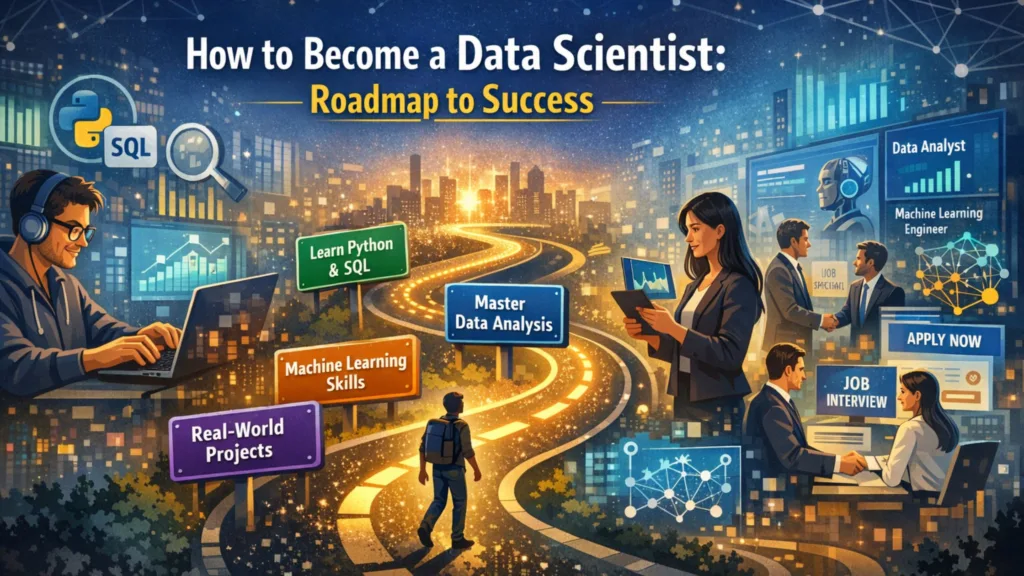
If you want clarity on How to Become Data Scientist, you must follow a structured and well-planned practical approach.
First, you must understand mathematics, statistics, and basic programming. These concepts form the backbone of data science and help you solve analytical problems with better accuracy, confidence, logic, and practical understanding.
Next, you should learn Python or R for data analysis and machine learning. Additionally, SQL helps you manage and retrieve data efficiently from large structured databases for reporting, analysis, automation, and real-time business decision support.
After that, focus on tools like Excel, Power BI, and Tableau. These tools help you visualize and interpret data effectively for reports, dashboards, and business insights across teams, departments, client presentations, and strategic planning processes.
You should also understand machine learning algorithms. These techniques help you build predictive models and automate decision-making for forecasting trends, reducing risks, improving efficiency, and solving complex problems.
Most importantly, you must apply your knowledge to real-world datasets. This step builds your portfolio and demonstrates your skills through practical experience, problem-solving ability, and project-based learning outcomes.
Structured programs provide hands-on learning, real-world projects, and career support. For example, DataWiz College offers practical training with industry tools and a job-focused curriculum.
Finally, you must focus on resume building, interview preparation, and networking to secure your first role with confidence, stronger communication, professional presentation, and better job opportunities.
By following these essential steps consistently, you can build a strong foundation and move confidently toward a successful data science career. Also visit Data Science Roadmap for more information.

A clear Data Science Roadmap helps you avoid confusion and stay focused on your goals, learning path, skill development, and long-term career direction.
At the beginner stage, you should focus on building a strong foundation in core concepts and tools.
At the intermediate level, you should start working with technical tools and practical datasets.
At the advanced stage, you should expand your knowledge into deeper analytical and technical areas.
At the job-ready stage, you should prepare yourself professionally for career opportunities.
Programs designed with this roadmap often include real-world projects and practical training, making students job-ready faster.
Once you understand How to Become Data Scientist, you can explore various Data Science Jobs. Some popular roles include:
Additionally, companies across industries actively hire data professionals. Therefore, you can work in finance, healthcare, retail, technology, and more. Because data drives decision-making, these roles continue to grow rapidly. Learn more about Data Science Jobs.
A Data Analyst Career and a data scientist role may seem similar, but they differ in scope. A data analyst focuses on analyzing past data and creating reports. On the other hand, a data scientist builds predictive models and works on advanced analytics.
However, many professionals start with a Data Analyst Career and later transition into data science roles. This approach provides a strong foundation and practical experience.
Moreover, training programs often cover both analytics and data science skills, allowing smooth career progression. For more information visit Data Analyst Career.

To succeed in How to Become Data Scientist, you must develop the right skills, practical knowledge, technical confidence, and a strong problem-solving mindset.
You must learn Python, SQL, Excel, Power BI, and machine learning tools to handle data efficiently, perform analysis accurately, build reports, and solve real-world business problems with confidence.
You must analyze complex datasets and identify meaningful insights for decision-making by applying logic, recognizing patterns, solving problems, and drawing accurate conclusions that support business growth.
You must present data using dashboards and charts to communicate insights clearly, improve understanding, support presentations, highlight trends, and help teams make faster strategic decisions.
You must explain findings in simple terms to stakeholders and decision-makers so they can understand the insights easily, take action confidently, align decisions with business goals, and improve overall organizational performance.
These skills ensure you stay competitive in the evolving job market and help you adapt to industry demands, technological changes, and growing career opportunities.
If you want to understand How to Become Data Scientist, choosing the right education path is crucial.
You can start with degrees in computer science, statistics, or mathematics. However, many learners prefer diploma or certification programs that focus on practical training.
For example, DataWiz College offers a Data Science & Analytics Diploma program that includes Python, SQL, Power BI, SAP, and cloud computing.
Moreover, these programs include:
As a result, students gain job-ready skills quickly, build practical confidence, improve technical abilities, and prepare themselves for real industry challenges.
One major reason people explore How to Become Data Scientist is the high earning potential. Entry-level roles offer competitive salaries, while experienced professionals earn significantly higher packages.
Additionally, you can grow into advanced roles such as:
Because demand continues to increase, this career ensures long-term growth, stability, better opportunities, and continuous professional advancement.
Theory alone cannot help you succeed in data science. Therefore, practical learning plays a crucial role. Programs that include real-world datasets, projects, and tools prepare you for actual job scenarios, improve problem-solving ability, strengthen technical understanding, and help you apply concepts confidently in professional environments.
For instance, DataWiz College emphasizes hands-on learning, real-world problem-solving, and career support, ensuring strong job readiness. As a result, students gain confidence, industry experience, practical exposure, better workplace understanding, and the skills needed to perform effectively in competitive data-driven roles.
While learning How to Become Data Scientist, you may face challenges.
However, consistent practice, structured learning, and real-world exposure help you overcome these challenges effectively.

Now you clearly understand how to become Data Scientist, along with the complete Data Science Roadmap, career options, and required skills.
If you follow a structured approach, build strong fundamentals, and gain practical experience, you can successfully enter Data Science Jobs and grow your Data Analyst Career into advanced roles.
To accelerate your journey, DataWiz College provides industry-focused training, real-world projects, and career support that help you become job-ready and confident in today’s competitive data-driven world.
You can start by learning basics like Excel, statistics, and Python. Then, follow a structured roadmap and practice real projects consistently.
The best roadmap includes learning fundamentals, mastering tools, working on projects, and gaining practical experience through training programs.
Popular roles include data scientist, data analyst, machine learning engineer, and business analyst across multiple industries.
Yes, a Data Analyst Career provides strong foundational skills and helps you transition into advanced data science roles easily.
