


The healthcare industry relies heavily on dedicated caregivers to support individuals experiencing physical or cognitive challenges. Many industry experts suggest that formal education is the most reliable pathway into this demanding field. A comprehensive personal support worker program provides the exact clinical foundation required to succeed. This guide details the curriculum, clinical hours, and admission requirements needed to launch your career. Therefore, prospective students will understand how to navigate their academic journey effectively and step into the medical field with absolute confidence.

Choosing the right educational institution dictates your future clinical competence. It is crucial to verify that the curriculum meets official provincial guidelines before enrolling. The DataWiz College curriculum is based upon the NACC’s Ontario Personal Support Worker 2022 Training Standard. This recognized framework prepares graduates to provide supportive care across a patient’s lifespan.
Consequently, students learn to assist individuals experiencing physical disability, cognitive impairment, and mental health challenges. Employers actively seek graduates who have trained under these rigorous, standardized protocols. Investing in this specific education demonstrates your commitment to patient safety and professional excellence.
The extensive academic journey requires 700 hours of comprehensive training. This structured approach effectively resolves the issue of underprepared caregivers entering active clinical floors. The curriculum combines theory, practice, and real-world clinical experience.
To accommodate busy schedules, the 24-week program offers multiple delivery modes.
Furthermore, day and evening classes are available to support working professionals transitioning into healthcare.
A high-quality curriculum breaks down complex medical concepts into digestible, practical lessons. The DataWiz program features 15 comprehensive modules designed to prepare you for a rewarding healthcare career. Mastering these targeted subjects ensures you become a highly valuable asset to any interdisciplinary medical team.
The initial courses focus on establishing strict safety, hygiene, and care protocols. Course 1, PSW Foundation, covers client-centered care, conflict resolution, and applicable legislation. Course 2 focuses heavily on Safety and Mobility, teaching infection control methods and equipment transferring techniques.
Understanding the human body is essential for monitoring patient health. Course 3 explores Body Systems, covering the basics of anatomy and the nervous, cardiovascular, and musculoskeletal systems. Furthermore, Course 4 details Assisting with Personal Hygiene, focusing on oral care, bathing, and humanistic healthcare.

Advanced modules prepare students for highly specific, complex patient scenarios. Course 10 focuses on Assisting with Medications within the defined scope of practice. This includes basic drug knowledge, administration routes, and observation for desired and undesired outcomes. Furthermore, Course 5 addresses Abuse and Neglect, covering signs of violence and the legal requirements for reporting.
Course 11 covers Cognitive and Mental Health Issues, including affective disorders, substance abuse, and schizophrenia. Course 13 introduces Gentle Persuasive Approaches for interacting with older adults. Understanding these responsive behaviors allows graduates to act appropriately in dementia care settings. Review our Personal Support Worker: Essential 2026 Career Guide for more insights.
Theoretical knowledge must be applied directly in active clinical environments. The training begins with 400 hours of in-school theory and practice, which includes all mandatory testing. Afterward, students complete required practicums to gain real-world confidence before graduation.
These placements serve as the critical bridge between the classroom and active, independent employment.
| Placement Component | Clinical Environment | Required Hours |
| Course 14 | Clinical Placement (Facility) | 200 Hours |
| Course 15 | Clinical Placement (Community) | 100 Hours |
During the facility placement, students work under preceptor and instructor supervision to build practical skills. The community placement allows students to practice in real-world environments while the instructor remains available for support.
Entering the healthcare sector requires meeting strict regulatory standards to protect vulnerable populations. DataWiz College enforces clear academic requirements, including a Grade 12 equivalent or mature student status. Furthermore, successful completion of an entrance examination is mandatory for all applicants.
Before beginning any practicum placement, students must provide specific background and health clearances.
Upon completion of all 13 courses and clinical placements, graduates receive an Accredited Certificate. Graduates will be equipped with essential skills to observe, document, and report changes in client condition for continuity of care. They communicate effectively as part of an interdisciplinary care team with strict professionalism and ethics.
This credential unlocks numerous employment opportunities for graduates across the sector. Hospitals, long-term care facilities, home care services, and retirement homes actively recruit trained professionals. (External Link Placeholder: Verify provincial hiring standards on the regional Ministry of Health website).
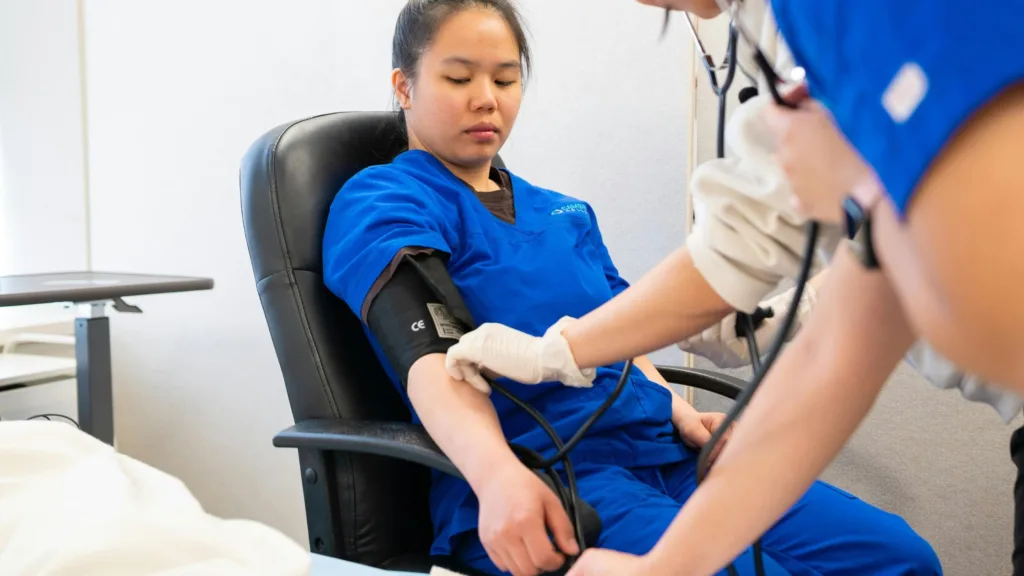
Completing a structured personal support worker program is a proven strategy for launching a stable clinical career. By mastering the 15 comprehensive modules and 300 clinical hours, you become highly prepared for the workforce. This education ensures you provide compassionate, professional care while maintaining client dignity. Therefore, taking action today secures your place in a rapidly expanding industry. Enroll in the 24-week program at DataWiz College to begin your caring career journey today.
