

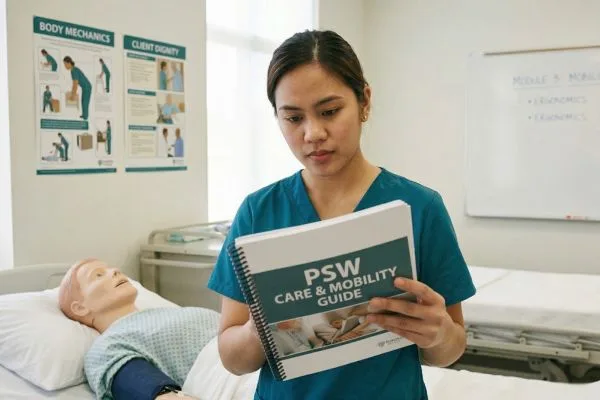
The healthcare sector faces a growing demand for qualified professionals to assist vulnerable populations. Many industry experts suggest that entering this field provides long-term career stability. A Personal Support Worker steps directly into this critical gap, providing essential daily care and improving patient quality of life. This guide details the educational steps and core competencies required to succeed in this demanding role. Therefore, readers will understand exactly how to build a strong foundation for a rewarding healthcare career through structured, accredited education.

Choosing the right academic pathway dictates your future success in clinical environments. It is crucial to verify that your chosen institution aligns with current regional care standards before making a commitment. Thorough research prevents wasted time and ensures your credentials will be respected by top-tier employers. Furthermore, a solid educational foundation minimizes the stress of transitioning into active care roles.
The recognized personal support worker program provides a balanced mix of theory and clinical practice. However, not all educational offerings deliver the same level of rigorous preparation. Prospective students must assess institutions based on objective, professional criteria. The DataWiz College curriculum is based upon the NACC’s Ontario Personal Support Worker 2022 Training Standard.
Consequently, this diligence ensures the curriculum meets strict government healthcare guidelines. The NACC Personal Support Worker 2022 (PSW) certificate program prepares graduates to provide supportive care. This includes assisting clients experiencing cognitive impairment, physical disability, and mental health challenges.
For a complete look at the 24-week structure, read our Personal Support Worker Program: Definitive Overview.
Modern care requires more than just basic compassion and empathy. Consequently, academic modules must cover complex, industry-aligned topics. This approach effectively resolves the issue of underprepared graduates entering high-stress environments. DataWiz College offers a structured 24-week program to build these exact competencies.
Furthermore, the program offers flexible delivery modes to accommodate different student needs. Students can choose between Online (Sync), Hybrid Learning, or In-Person formats. Day and evening classes are available to further support working professionals.
Accreditation acts as a seal of quality for any educational institution. This signifies that the program has undergone rigorous external review by health authorities. Therefore, graduating from an accredited institution is highly regarded by hiring managers.
The comprehensive training combines theory, practice, and real-world clinical experience. The total duration of the program is exactly 700 hours. This extensive timeframe ensures students fully absorb complex medical protocols.

Theoretical knowledge must seamlessly transition into practical, real-world application. Comprehensive PSW training bridges the gap between the classroom and the clinical floor. In addition, this hands-on phase builds the confidence required to handle emergency situations efficiently.
The foundation of this training begins within the classroom and simulated lab environments. Courses 1 through 13 focus heavily on in-school theory and practice. This initial phase includes all necessary academic testing and requires 400 total hours to complete.
Students apply foundational health and safety knowledge, including infection control. Furthermore, they learn risk-reduction practices to protect themselves and their patients. Mastering these basics is mandatory before any student interacts with the public.
Supervised practicums are the cornerstone of any respectable healthcare education. Students shadow experienced mentors in active healthcare environments. As a result, they learn to navigate the unpredictable nature of patient care safely.
The program mandates two distinct clinical placements to ensure a well-rounded experience:
During these placements, students work under preceptor and instructor supervision. This ensures they gain experience and confidence in a wide range of essential skills.
Graduates must possess a specific set of highly technical and interpersonal skills. Therefore, training heavily emphasizes daily assistance protocols. Mastering these skills is essential for daily operational success and patient safety.
Students learn to provide safe and compassionate assistance with activities of daily living. This assistance must always maintain the client’s dignity and independence. Furthermore, students support household and nutritional needs, including safe food handling and meal planning.
Learn more about hands-on skill building in our guide on Effective PSW Training: Building Clinical Competence.
Individual course structures heavily influence student retention and overall success. The high-quality personal support worker course breaks down complex medical jargon into digestible lessons. Consequently, students can master the material without feeling overwhelmed. The curriculum features 15 comprehensive modules designed to prepare individuals for the field.
The program begins by establishing the core responsibilities and safety protocols of the role. Course 1, PSW Foundations, provides an overview of responsibilities in various settings. Students learn client-centered care, stress management, and conflict resolution.
Course 2 focuses entirely on Safety and Mobility. Topics include infection control methods, body mechanics, and lifting techniques. These techniques utilize specific equipment to increase safety and reduce anxiety for both the client and the worker.
Understanding the human body is critical for recognizing signs of distress or decline. Course 3 dives into Body Systems, covering the basics of anatomy and physiology. This includes understanding the musculoskeletal, urinary, cardiovascular, and nervous systems.
Course 4 covers Assisting with Personal Hygiene for ill, disabled, or injured clients. Personal hygiene training includes oral care, bathing, grooming, and skin care. This instruction maintains a strict focus on dignity and humanistic healthcare.
The aging population requires caregivers trained in specific, complex protocols. Course 9 covers Assisting the Dying Person, focusing on hospice and palliative care. Students learn how to provide physical comfort and emotional support during end-of-life stages.
Course 11 addresses Cognitive/Mental Health Issues, such as schizophrenia, substance abuse, and brain injuries. Furthermore, Course 13 introduces Gentle Persuasive Approaches. This module helps students understand and respond effectively to responsive behaviors in dementia care.
Dive deeper into the specific academic modules in our Personal Support Worker Course: Comprehensive Syllabus.

Embarking on a new career path requires meeting strict regulatory and academic standards. It is crucial to verify that you meet all prerequisites before applying. However, this rigorous process ensures that only dedicated, capable individuals enter the vulnerable healthcare sector.
DataWiz College enforces clear academic prerequisites for all applicants. Students need a Grade 12 equivalent or mature student status. Furthermore, successful completion of an entrance examination is mandatory.
Because the role involves direct interaction with vulnerable individuals, background checks are strictly enforced. Students must provide a clean Canada-wide Police Criminal Record Check. This document must include Vulnerable Sector Screening (VSS) before any clinical placement begins.
Infection control and personal health are top priorities in any clinical setting. Therefore, students are required to submit a completed and satisfactory medical report. This must be finalized prior to beginning any practicum placement.
The medical report form outlines the required documentation for immunization records. It also requires a history of specific communicable diseases. These strict protocols protect both the students and the vulnerable patients they will serve.
Completing your education culminates in the final certification process. Earning your personal support worker certificate proves your competence to potential employers. Furthermore, it serves as a mandatory requirement for hiring in most reputable clinical settings.
Graduates must pass standardized assessments to validate their clinical knowledge. Preparing for these exams requires a dedicated review of both theory and practical protocols. Rigorous preparation minimizes test anxiety and improves overall passing rates.
Upon successful completion of all 13 courses and the clinical placements, graduates are recognized. They are awarded an Accredited Certificate aligned with the NACC Ontario Standard 2022.
Securing your credentials is the final step before launching your active job search. Professional resumes must highlight specific clinical hours and specialized course modules. This targeted approach effectively resolves the issue of blending in with other entry-level applicants.
Graduates are fully equipped to deliver person-centred care. They can expertly respond to clients’ physical, emotional, cognitive, cultural, and spiritual needs. Furthermore, they are trained to accurately observe, document, and report changes in a client’s condition.
Discover the employment advantages of this credential in our guide, Personal Support Worker Certificate: Strategic Value.

A role in personal support is often a stepping stone to broader healthcare careers. The foundational knowledge acquired serves as excellent preparation for advanced roles. In addition, professionals can pursue diverse employment opportunities immediately upon graduation.
The healthcare landscape continuously evolves, creating a high demand for certified professionals. Graduates have a wide array of career pathways available to them. The comprehensive training ensures they are competitive candidates in multiple environments.
Employment opportunities include:
Caregivers rarely work in isolation; they are integral parts of a larger healthcare team. They collaborate daily with nurses, doctors, physical therapists, and family members. Therefore, clear and concise reporting is an absolute mandate.
Graduates are trained to communicate effectively as part of an interdisciplinary care team. They execute their duties with strict professionalism and ethics. Accurate communication ensures that the entire medical team understands the patient’s current, precise status.
Entering the healthcare sector as a Personal Support Worker requires dedication, rigorous training, and the right educational foundation. By carefully evaluating programs and mastering the 15 comprehensive academic modules, you position yourself for a stable career. This guide outlines the essential steps, from the 700 hours of training to final certification, ensuring you are well-prepared. Therefore, taking proactive, informed steps today will secure your place in this vital industry. Join the 800+ PSW graduates who have already transformed their careers. Ready to take the next step? Enroll in the 24-week NACC Personal Support Worker Program today to begin your journey. For more information visit DataWiz College.
